Stone, Time, and Ancient Greece
There are places where history feels distant, something preserved behind glass or flattened into the pages of a book. The Acropolis and Delphi in Greece are not like that. Standing there, on grounds that have held meaning for roughly 3,500 years, history feels physical. It is underfoot, embedded in the stone, worn into the marble. There is a particular kind of awe that comes from realizing that countless people have stood in nearly this same place before you, looking at the same mountains, the same sky, and the same landscape.
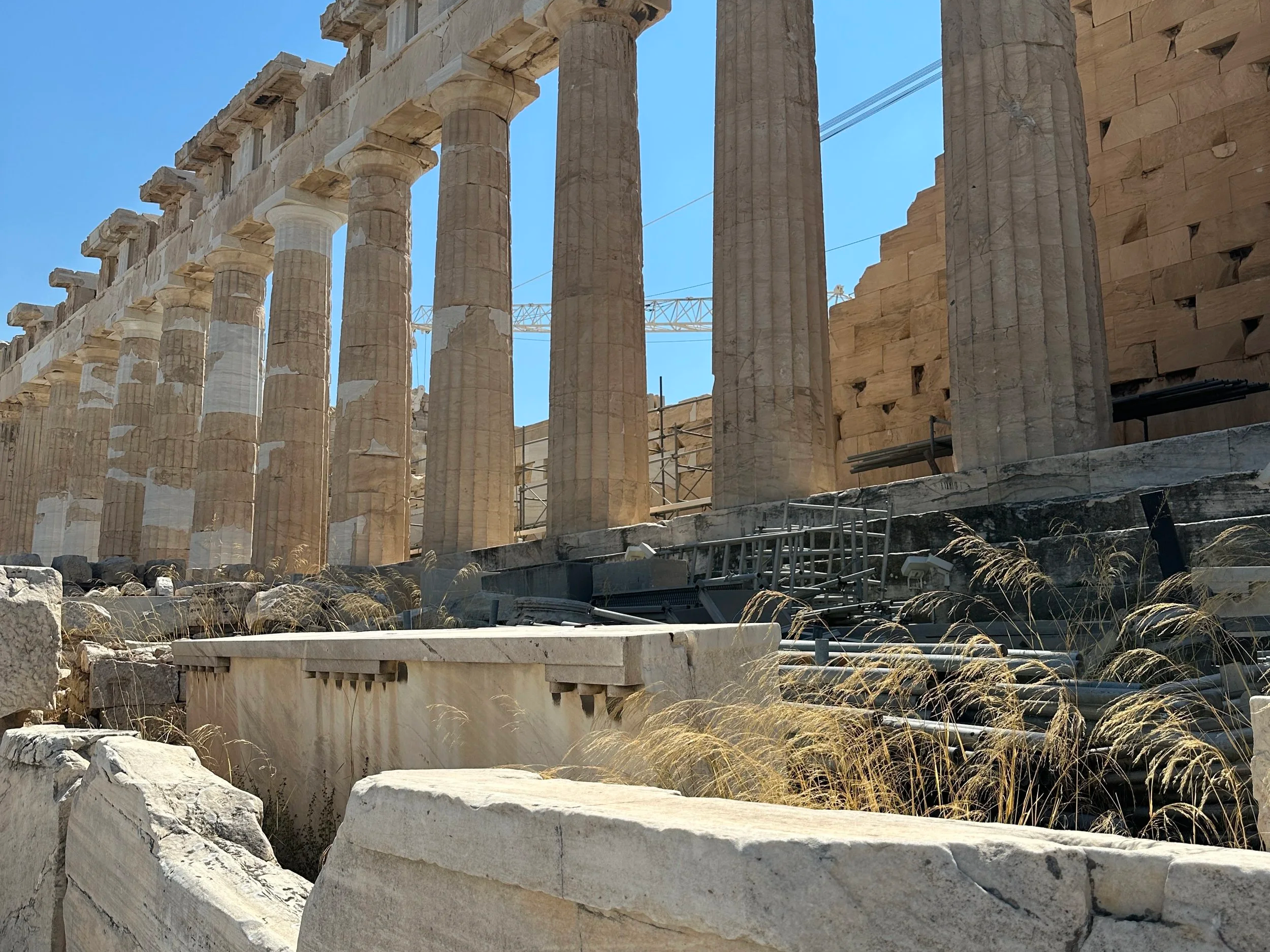
The Parthenon colonnade.
With a degree in Art History focused on Classical Studies, these places have lived in my imagination for a long time. I studied the temples, the orders, the proportions, the mythology, and the history behind them. But no photograph or drawing prepares you for the experience of standing beside them. The scale is immense, the carvings are beautiful, but it is the stone that struck me most.
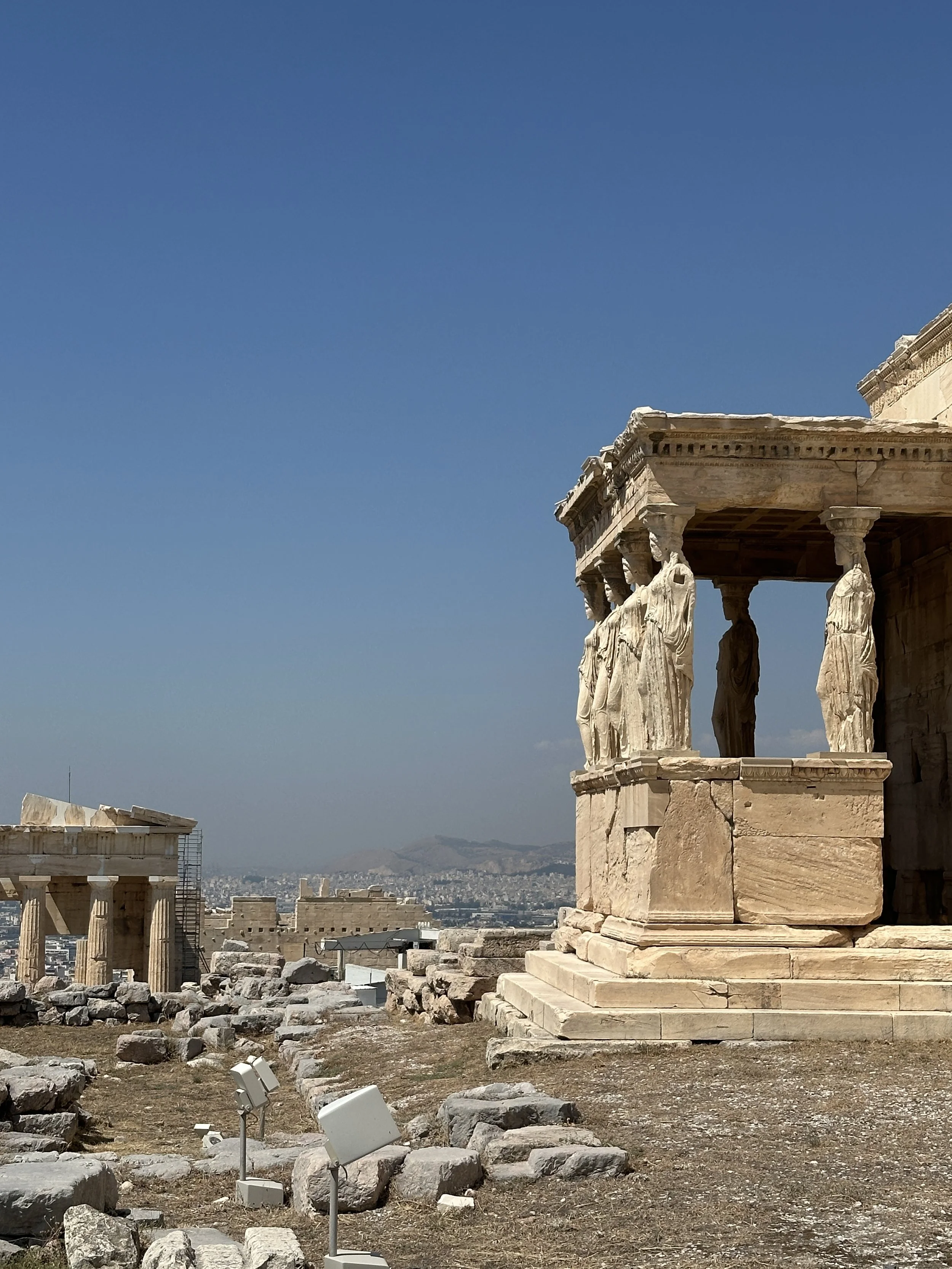
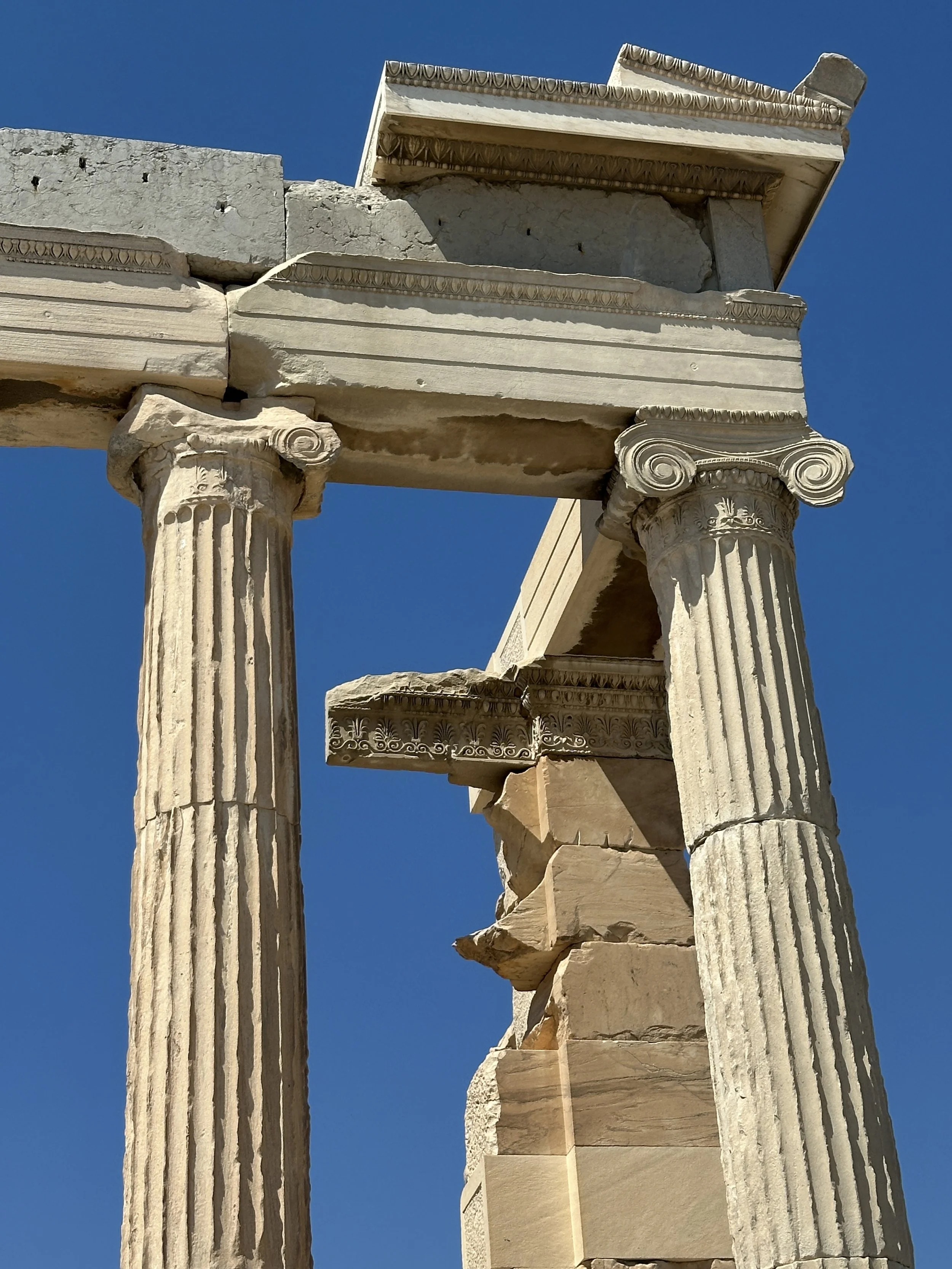
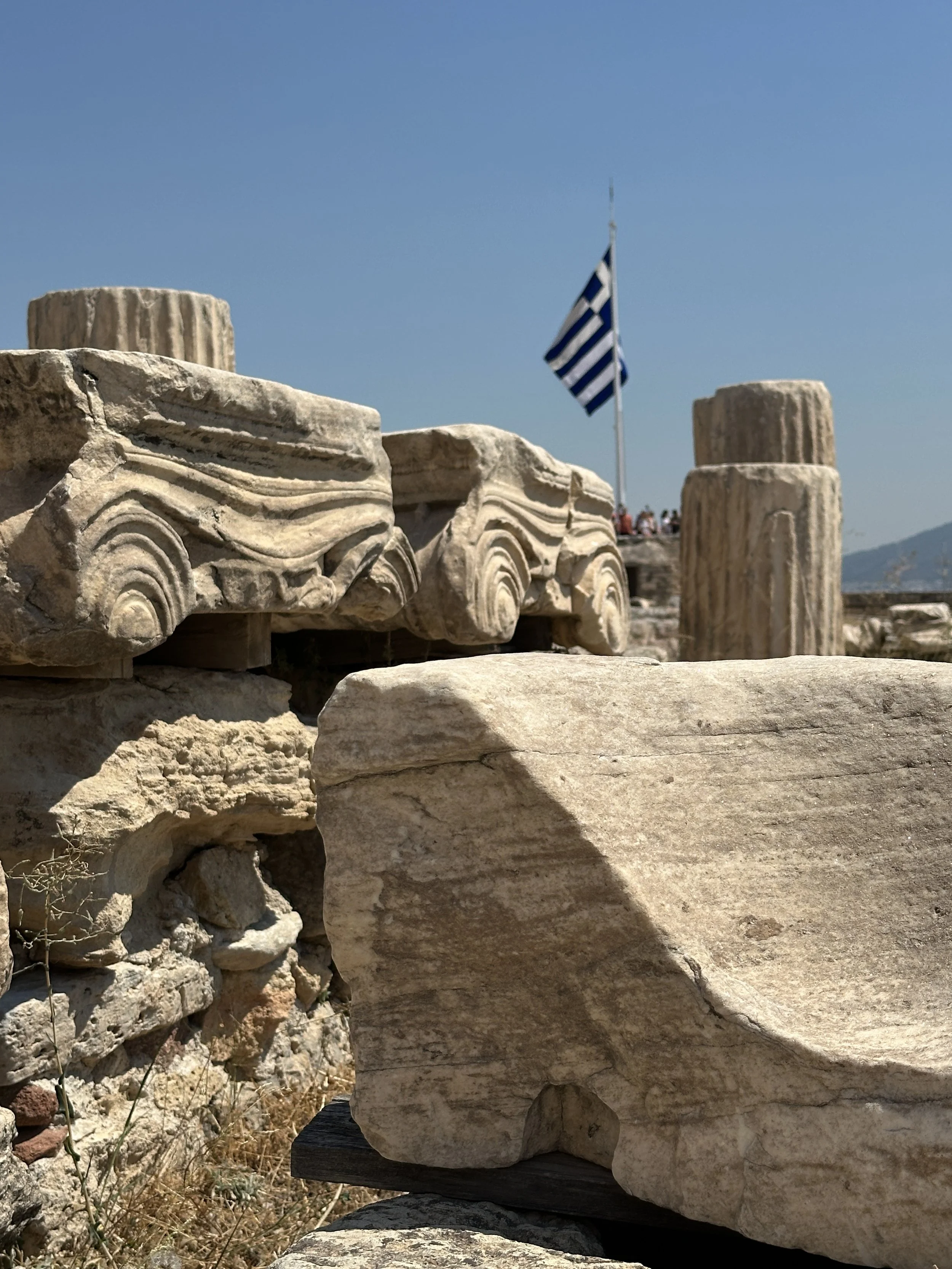
I found myself looking at the surfaces as much as I was at the architecture itself. The marble is weathered and softened, its edges worn by centuries of exposure and invaders who hacked away at the surfaces. There are stains, repairs, fractures, discolorations, and subtle variations that have accumulated over time. What remains is not the pristine monument that once was, but something much more beautiful: architecture that has been allowed to age and tell a story.
That patina is part of the experience. The worn steps and softened edges tell you that these buildings have been touched by thousands of years of human life. Time has become another layer of the architecture, just as meaningful as the original carving. It made me think about how often we try to make things new, perfect, and untouched, when there is so much beauty in evidence of use.
At Delphi, the relationship between the micro and macro is even more powerful. The sanctuary feels like a carefully composed experience—one that unfolds as you climb up the mountain past the temples, the theater, and finally the stadium. There is a natural rhythm to the procession, the changing views, the fragments of columns and walls, and the landscape beyond. And yet, if you take the time to look closely, you will see ancient greek carved into the foundation stones, or bricks forming an intricate pattern in the hillside.
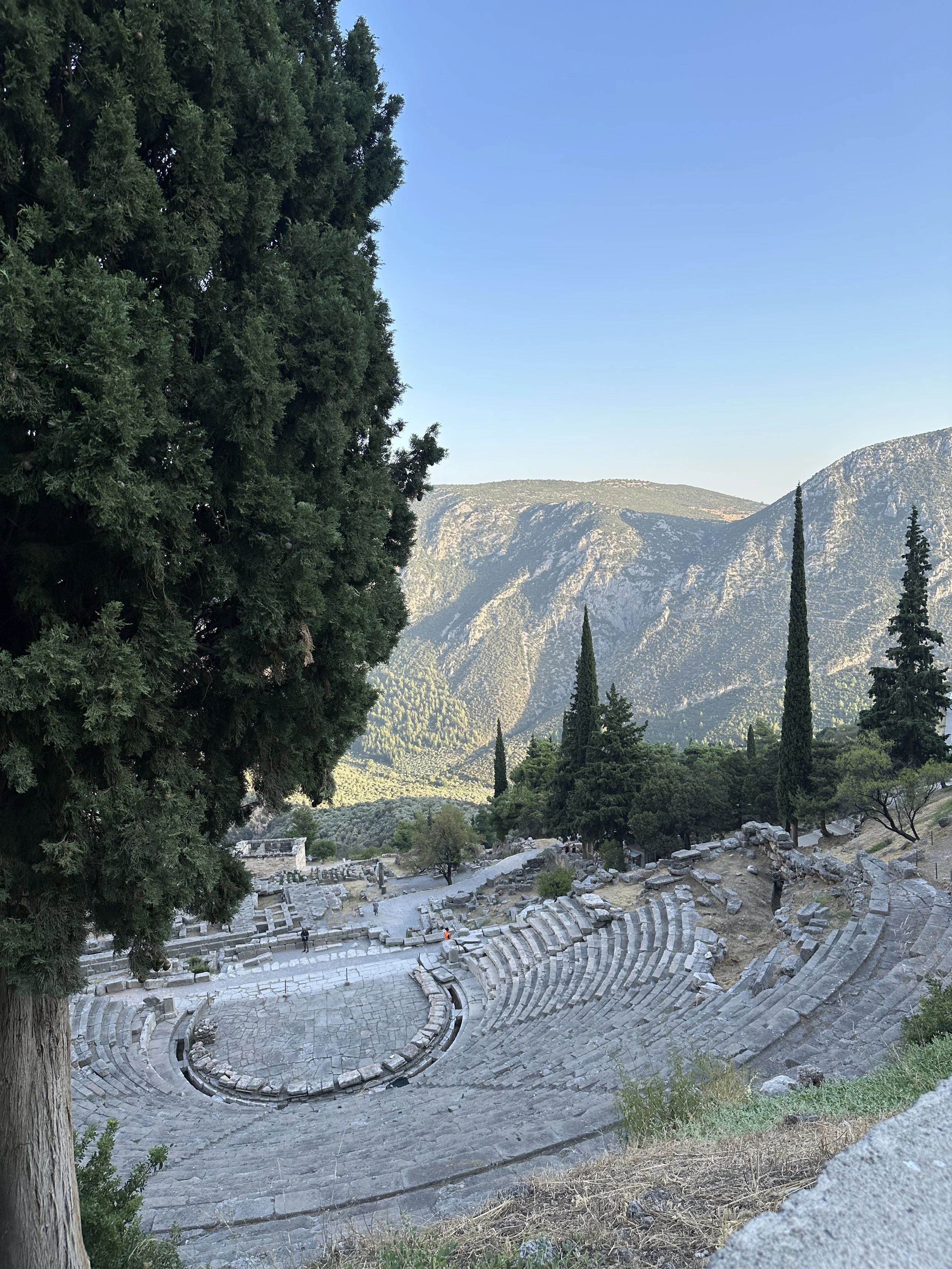
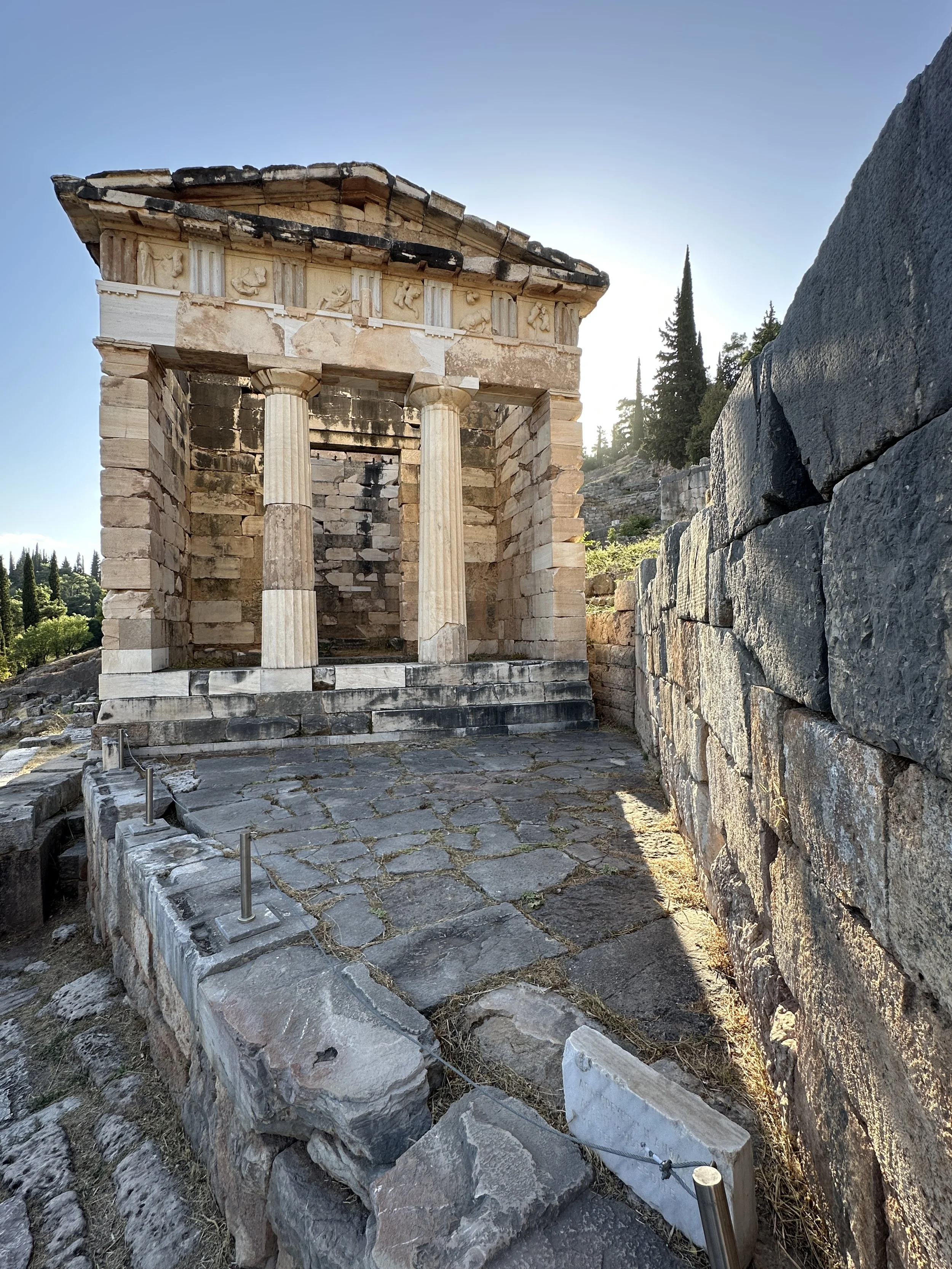
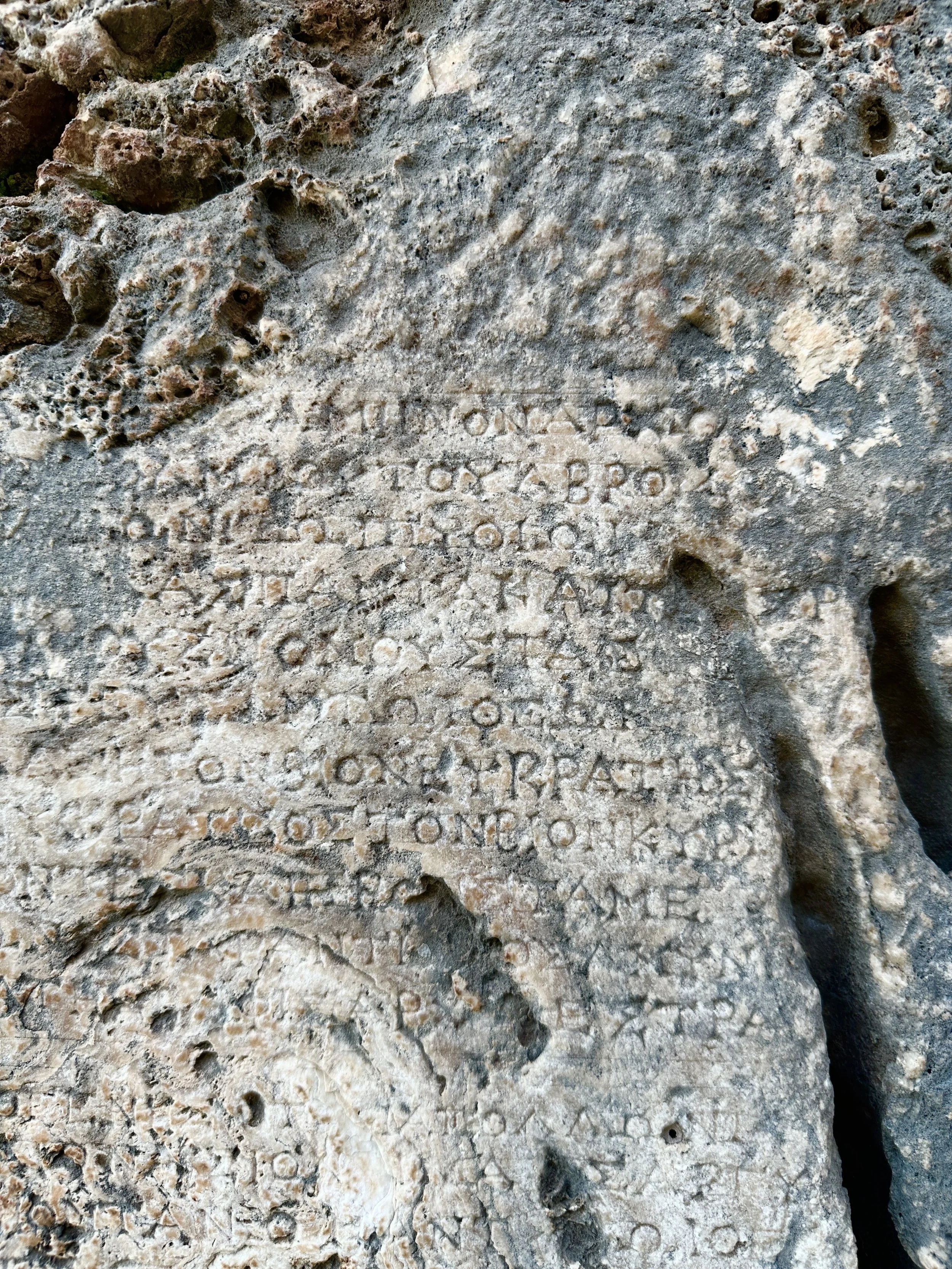
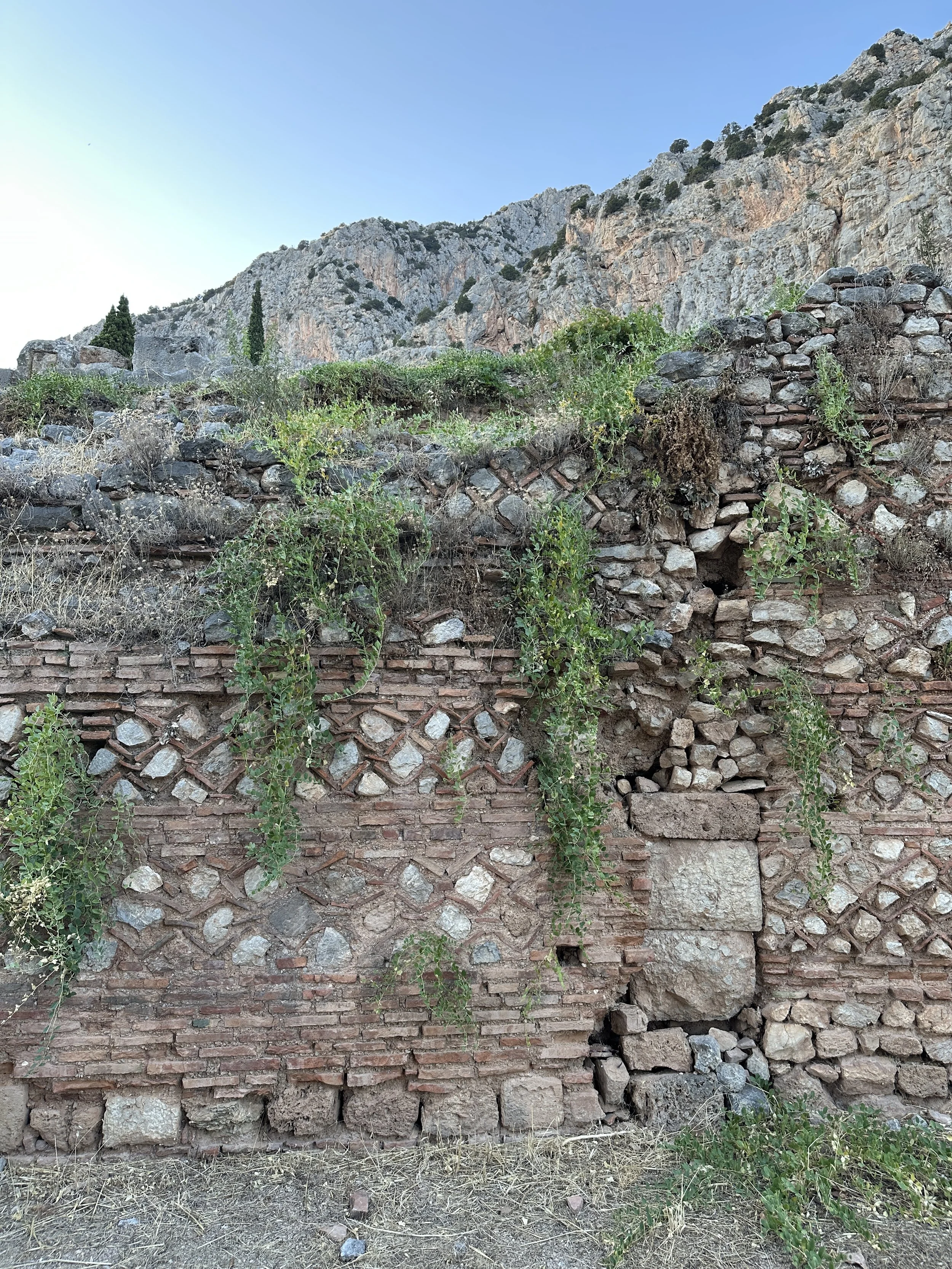
It was impossible not to think about Philadelphia while walking through these ancient sites. So much of the city’s architecture was consciously looking back to Greece. The Philadelphia Museum of Art, with its monumental steps, columns, and pediment, draws directly from the language of the classical temple. The Second Bank of the United States takes that language in a more restrained direction, its façade modeled on the Parthenon. These buildings were created centuries after the originals, but they speak to the enduring power of the same proportions, materials, and ideas. It made me think about what we choose to carry forward from the past—not simply an architectural style, but ideas about proportion, balance, craftsmanship, and the relationship between a building and its surroundings.
That is perhaps what I brought home from Greece most: an appreciation for things that are well made, grounded in their materials, and given enough time to become something more than new. A piece of stone can hold thousands of years of weather. A building can gather history. And a space can become more beautiful not by remaining untouched, but by allowing life to leave its mark.