Shofuso and the Art of Living with Nature
Some places impress through grandeur. Shofuso, the Japanese Cultural Center in Fairmount Park in Philadelphia, achieves something more difficult: it creates a profound sense of calm.
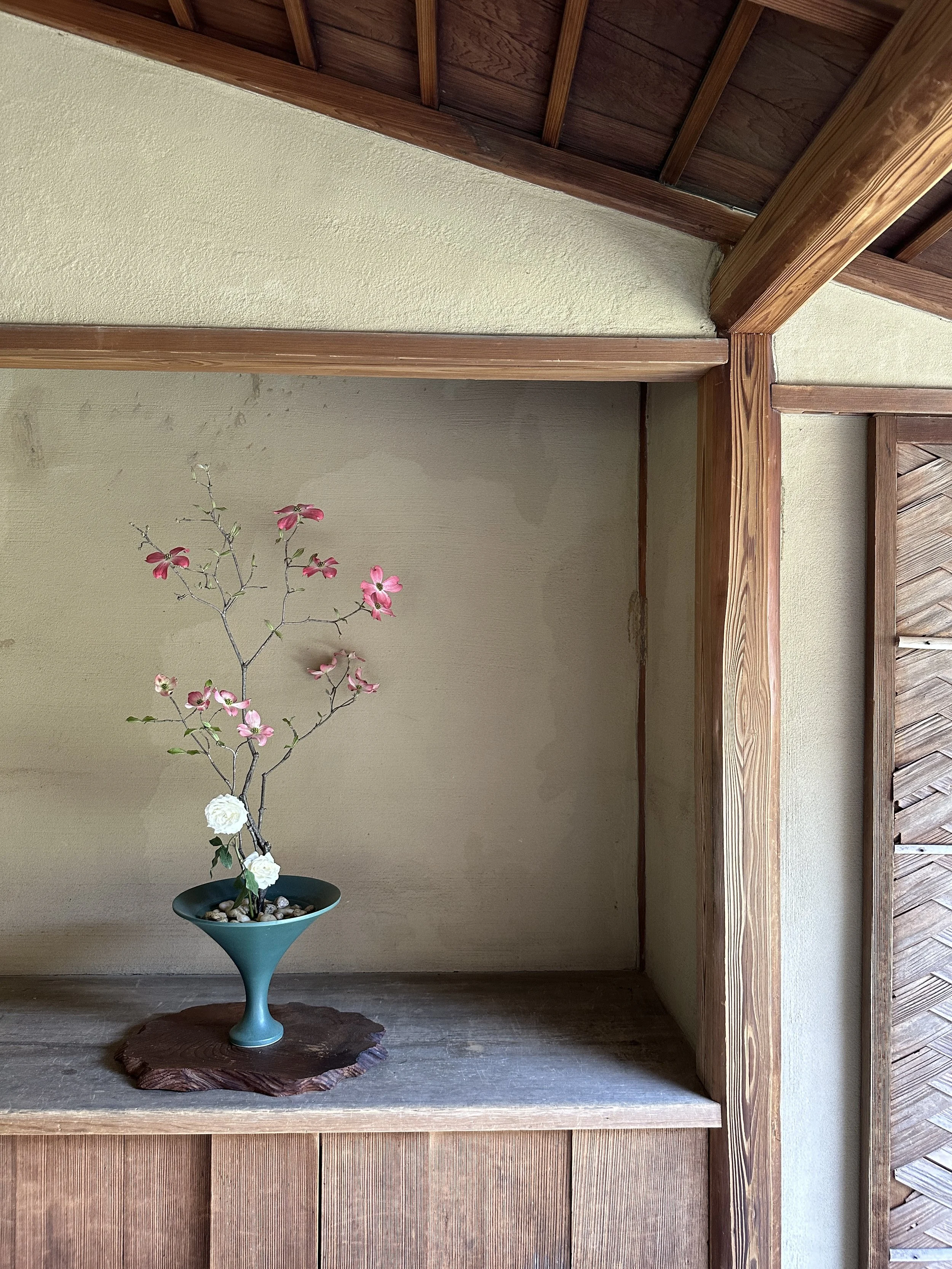
A simple ikebana arrangement highlights the beautiful nuance in the walls it sits in front of.
From the moment you enter, the house feels less like an object and more like an experience. There is no excess, no unnecessary ornament, no demand for attention. Instead, Shofuso reveals the power of simplicity. Every material, proportion, and view feels carefully considered, creating an environment that encourages stillness and contemplation.
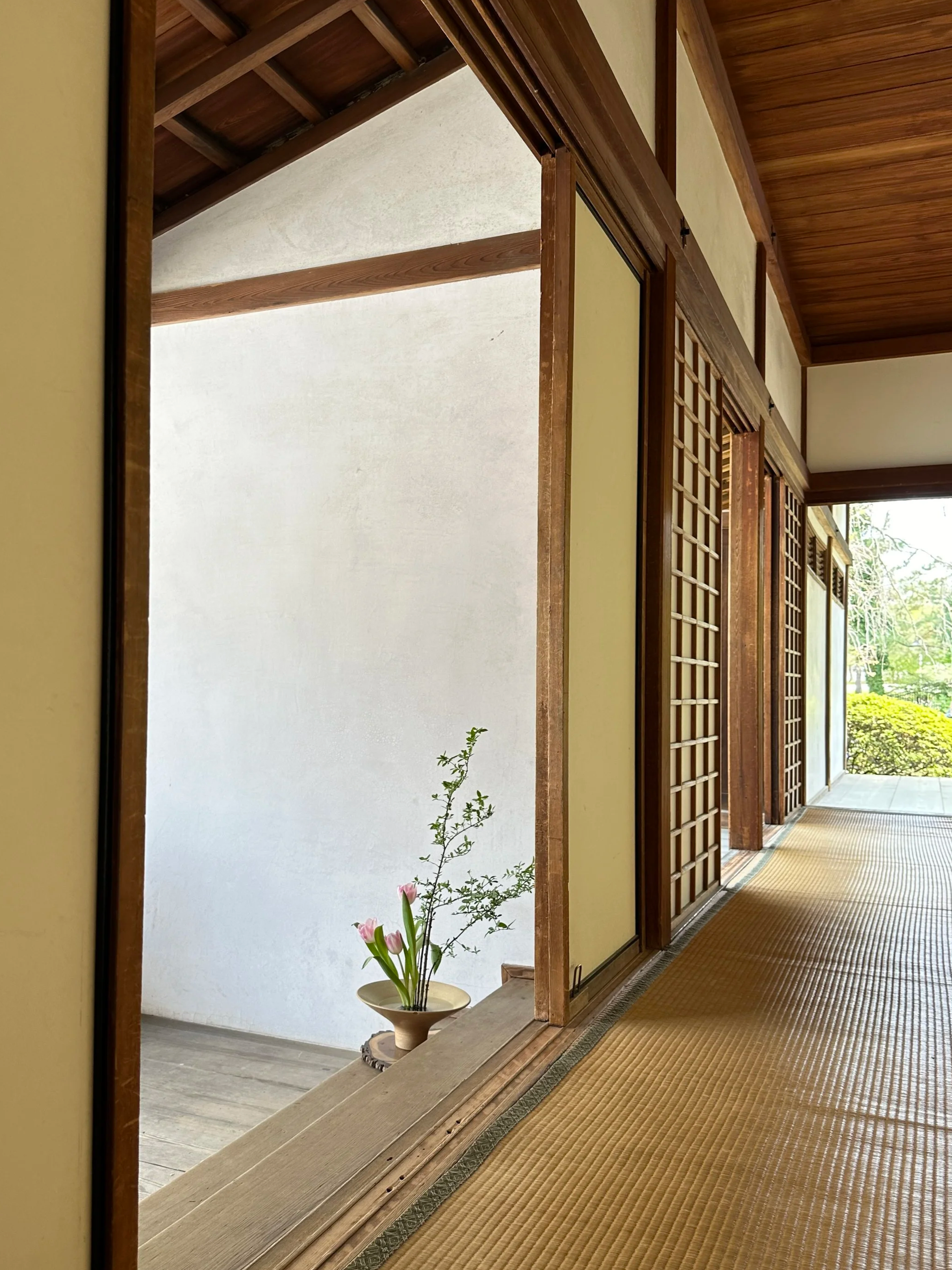
What struck me most was the materiality of the house. Wood is everywhere—not hidden behind layers of paint or decoration, but celebrated in its natural state. The exposed timber structure brings warmth and texture to every room. Grain patterns, subtle variations in color, and the evidence of craftsmanship create a feeling of authenticity that modern materials often lack. The tatami mats quietly cover the floors, the rice paper celebrates light, even the modern brass outlets coexist seamlessly. The house feels alive because its materials once were.
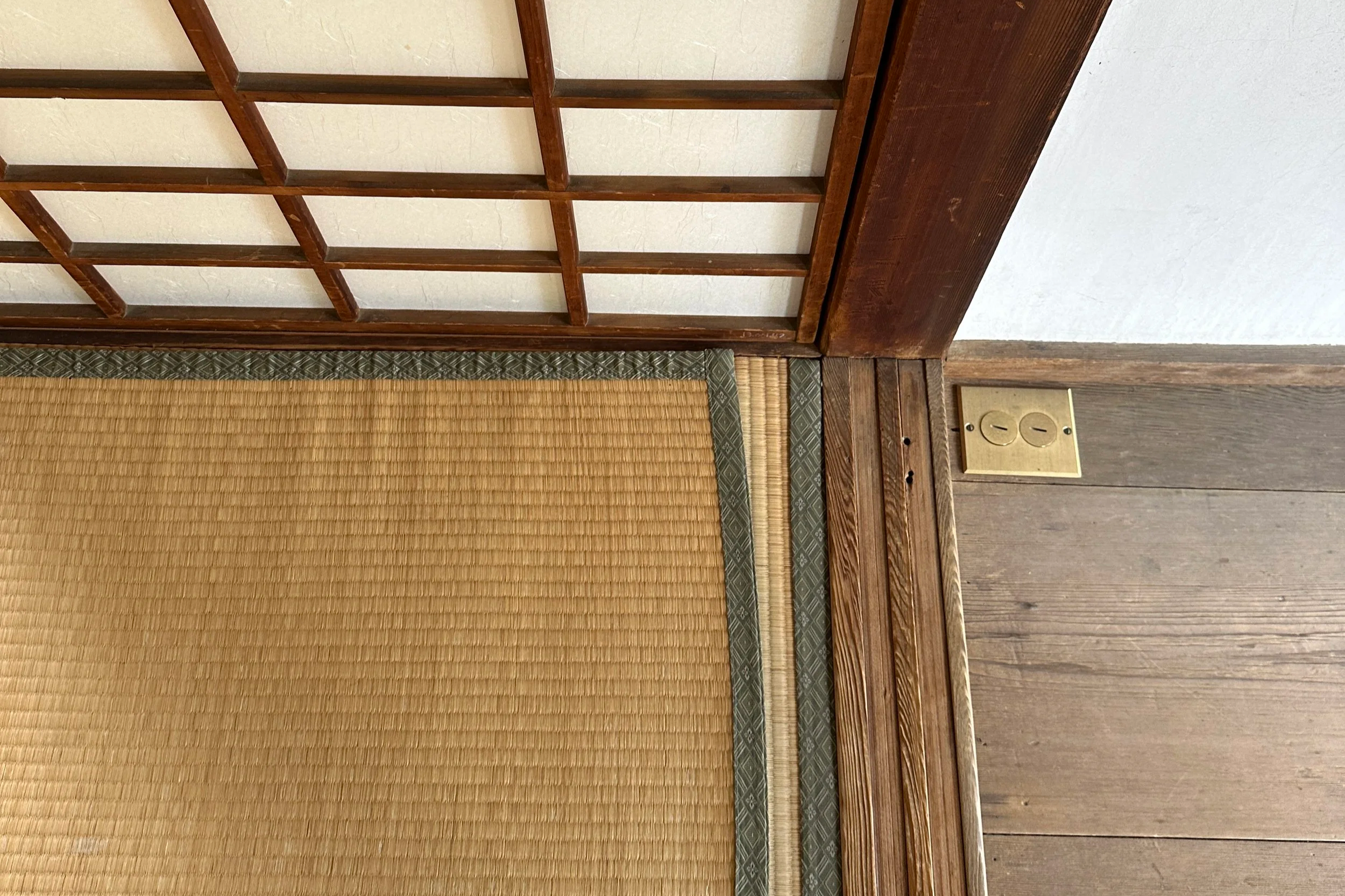
An intersection of beautiful materials.
The architecture is equally remarkable for what it chooses to leave out. Spaces remain open and uncluttered. Sliding screens filter light rather than block it. Rooms flow into one another with an ease that feels natural rather than imposed. The simplicity is not emptiness. It is intentional restraint, allowing attention to settle on light, shadow, texture, and the changing landscape beyond the walls.
Perhaps the most beautiful aspect of Shofuso is the way it dissolves the boundary between indoors and outdoors. Large openings frame views of the garden like living paintings. Reflections from the pond shimmer across interior surfaces. Seasonal changes become part of the architecture itself.
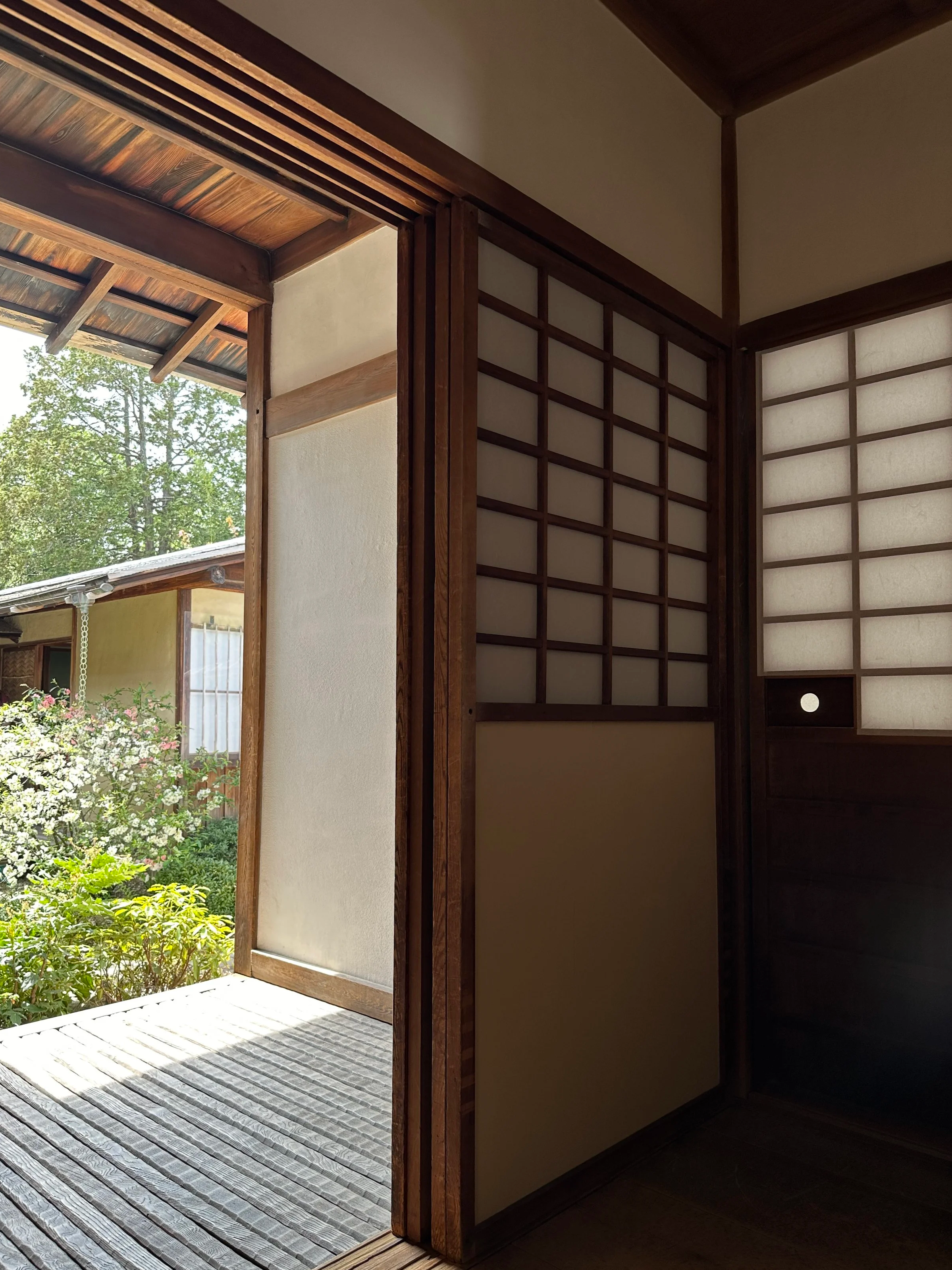
A view from the house to the garden.
Today, designers often describe this connection as biophilic design—the practice of creating environments that strengthen our relationship with nature. Shofuso demonstrates these principles with remarkable elegance. Natural materials, abundant daylight, framed views, fresh air, and constant visual connection to living landscapes all contribute to a sense of well-being. The house reminds us that humans are not separate from nature; we are restored by proximity to it.
Long before the term existed, Shofuso embodied the ideas that contemporary research continues to validate: natural environments can reduce stress, improve focus, and support emotional health. The house is designed not merely for shelter, but for human flourishing.
Visiting Shofuso also brought to mind Jun'ichirō Tanizaki's In Praise of Shadows, a meditation on Japanese aesthetics that challenges many Western assumptions about beauty and comfort. Tanizaki asks readers to reconsider a culture that often pursues brightness, polish, and perfection at all costs. He celebrates deep eaves that soften harsh sunlight and create layers of shadow, arguing that beauty often emerges not from what is fully illuminated but from what remains partially concealed. He finds richness in the tarnish of old silver, the patina that develops through use and time, and the subtle textures that modern society often tries to erase. Even his reflections on traditional bathrooms offer a different vision of domestic life—spaces connected to gardens, wood, stone, and moss rather than sterile white surfaces and artificial light. Walking through Shofuso, these ideas feel tangible. The house invites an appreciation of filtered light, natural aging, and the quiet atmosphere created when architecture works with nature rather than attempting to dominate it.
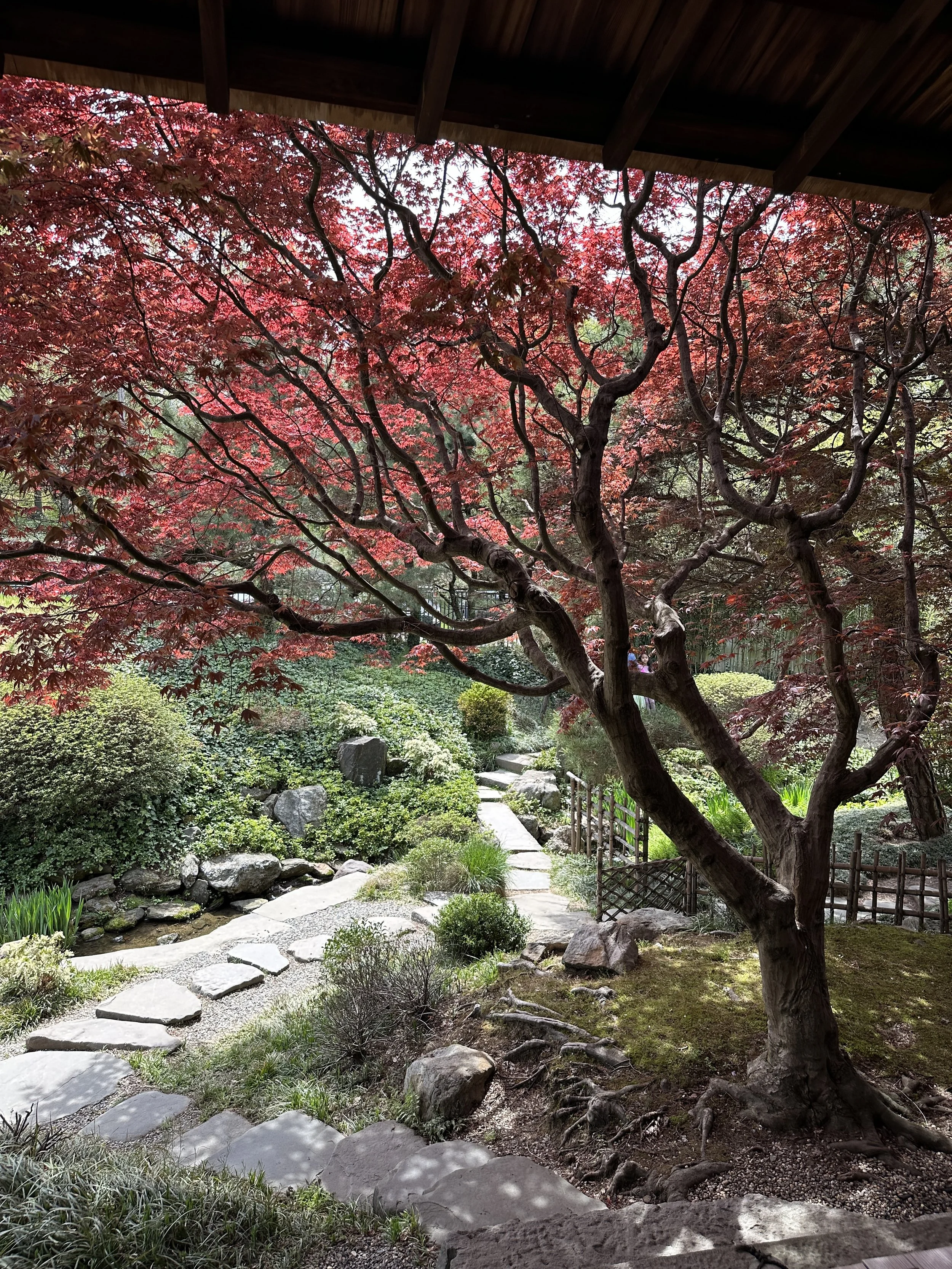
A Japanese maple beckons you out to the garden.
What emerges from a visit is a deeper understanding of home itself. In modern life, homes are often treated as places of consumption, storage, or display. Shofuso offers a different vision. Home can be a place for contemplation. A place to notice the changing light. A place to observe a tree moving in the wind. A place where architecture supports well-being through quiet connection rather than constant stimulation.
The beauty of Shofuso is not found in any single detail. It exists in the relationship between wood and light, structure and landscape, simplicity and experience. It is a reminder that good design does not always add more. Sometimes its greatest achievement is creating the conditions for us to slow down, pay attention, and feel more connected to the natural world around us.
In that sense, Shofuso is more than a house. It is a lesson in how we might live.