The Magic of the Wharton Esherick House
Some houses are designed. Others are assembled. The Wharton Esherick House feels as though it was grown.
Perched on a wooded hillside outside Philadelphia, the home of artist and craftsman Wharton Esherick is one of the most complete expressions of an individual creative vision that I have ever encountered. It is not simply a house filled with art, the house itself is the artwork.
What makes the experience so memorable is the sense that every detail has been touched by Esherick's imagination. Nothing feels standard or borrowed. Every surface invites closer inspection.
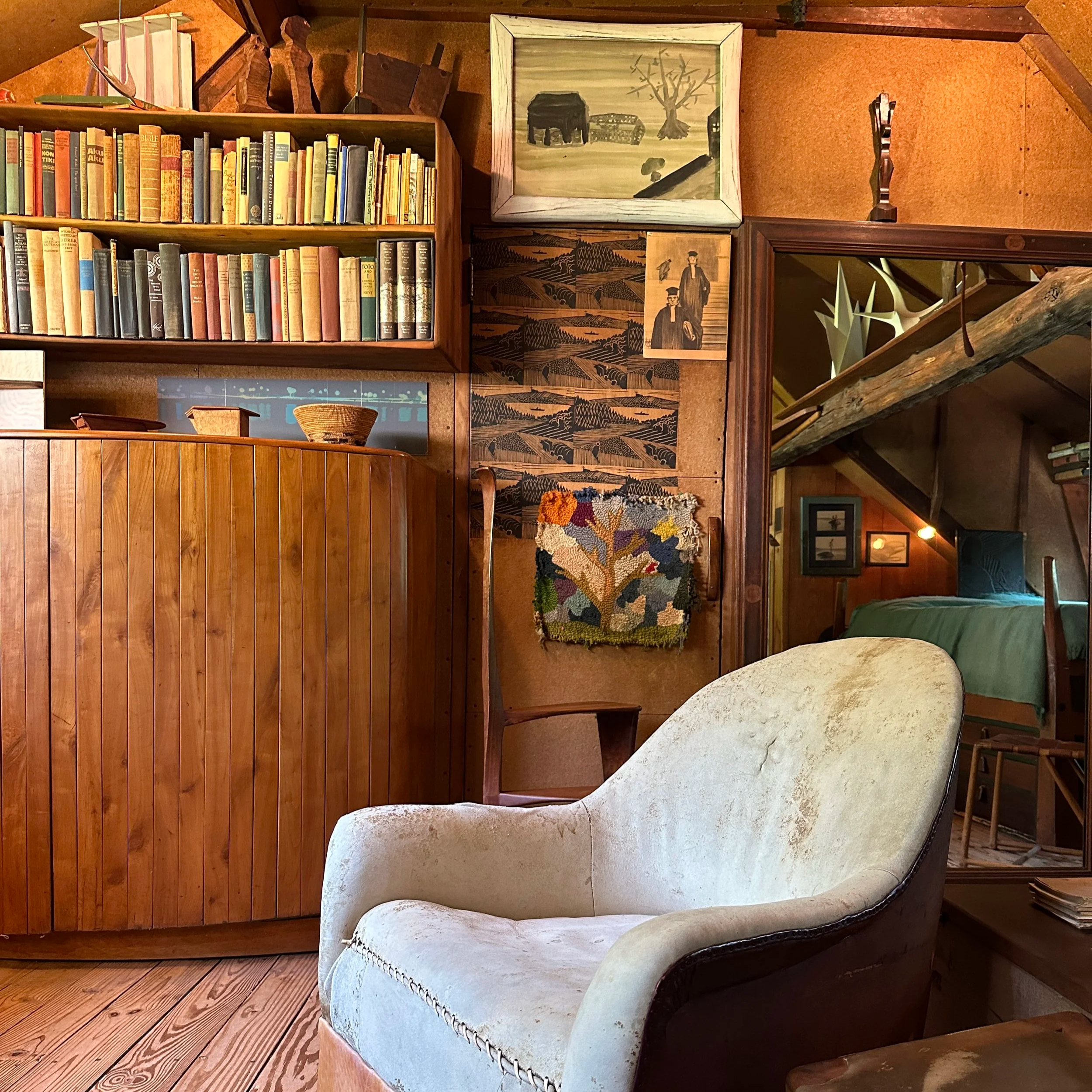
A sitting area in the bedroom is stuffed with interesting textures, colors, and stories.
One of the most captivating examples is a carved wooden door equipped with an ingenious wooden locking mechanism. In most homes, hardware disappears into the background. Here, the lock becomes an object of fascination. It transforms a simple act—opening a door—into a moment of discovery. The mechanism reveals Esherick's delight in craftsmanship and his belief that utility and beauty should never be separated.
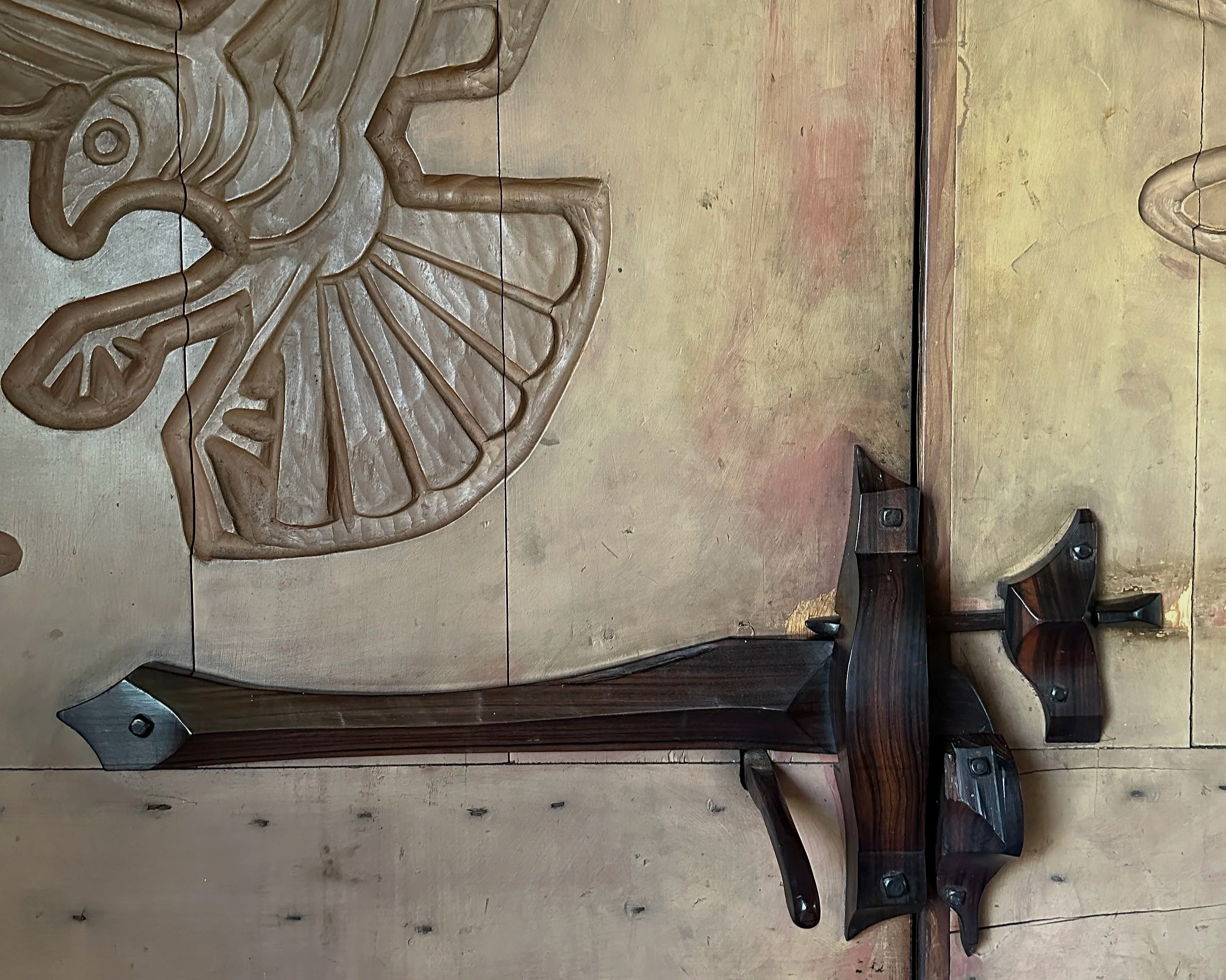
A beautiful wooden lock calls for closer inspection.
The same spirit appears throughout the house. Pendant lights hang from sculptural carved wooden supports, turning functional fixtures into elegant compositions. Rather than concealing structure, Esherick celebrated it. Even elements we rarely notice become opportunities for artistic expression.
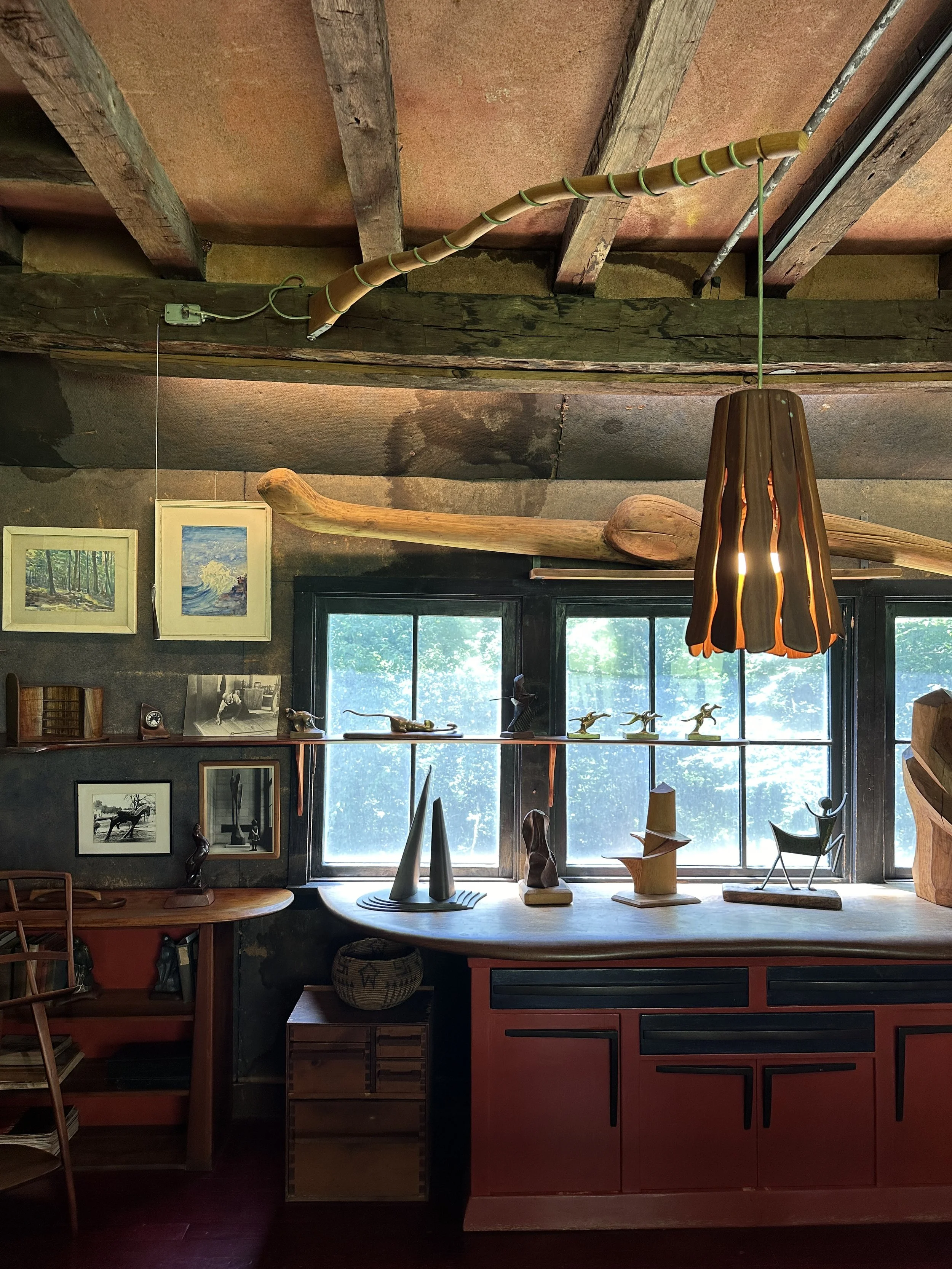
A pendant light surrounded by sculptures, photos, and collectables.
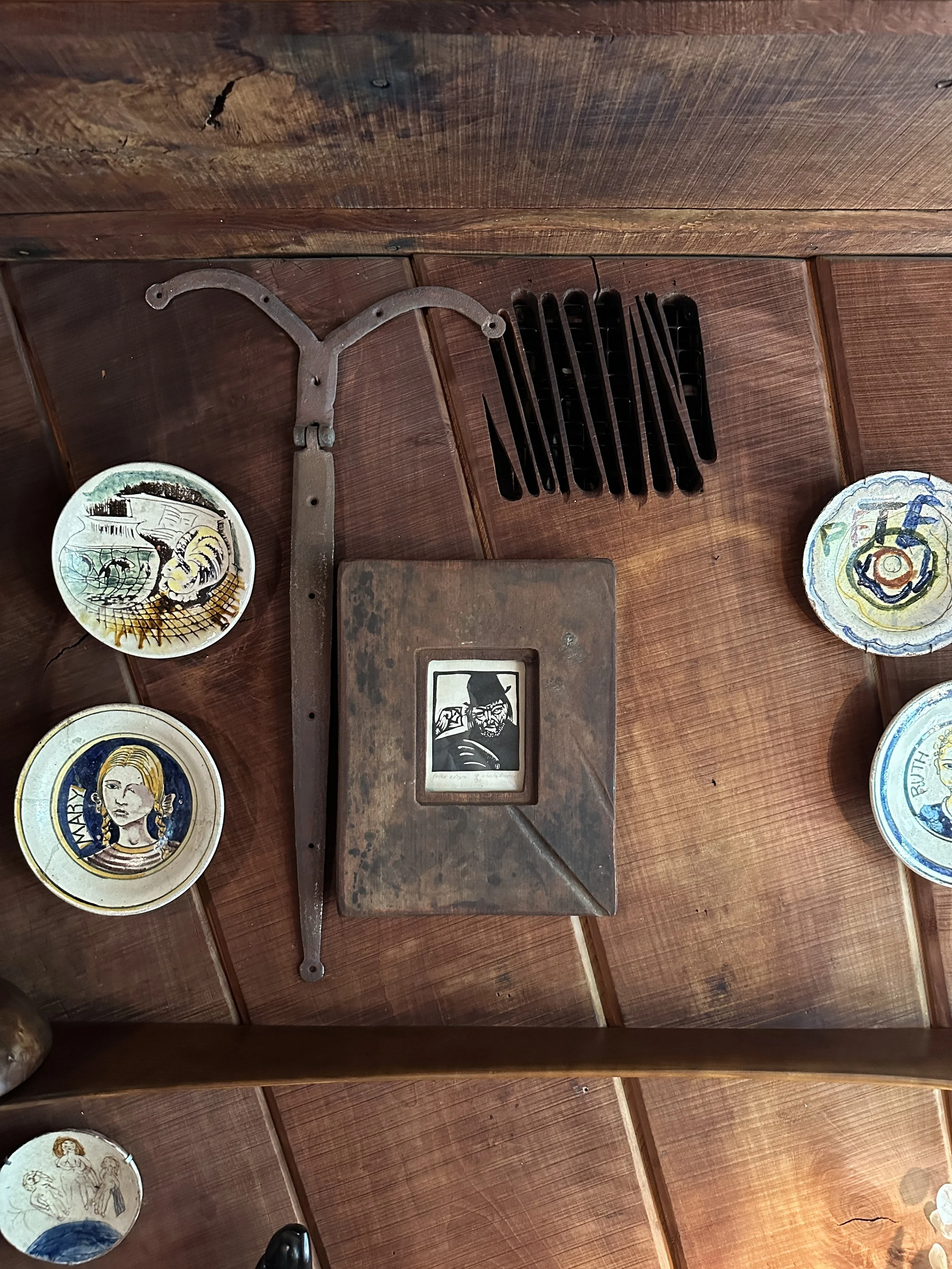
Perhaps most surprising are the vents carved directly into the wooden paneling. In most buildings, vents are necessary interruptions in the design. Here, they are seamlessly integrated into the architecture, their shapes contributing to the visual rhythm of the walls. These details reward slow looking. The longer you spend in the house, the more unexpected moments you discover.
There is a rare authenticity to the entire place. Nothing feels manufactured for an audience. The house emerged over decades as Esherick continually shaped his surroundings according to his own instincts. The result is deeply personal and impossible to replicate. It reflects a way of living in which creativity was not reserved for a studio or gallery but infused into every aspect of daily life.
The staircases curve like sculpture. Furniture grows naturally from the architecture. Rooms unfold with surprising proportions and sightlines. Everywhere, wood is transformed into something expressive and alive.
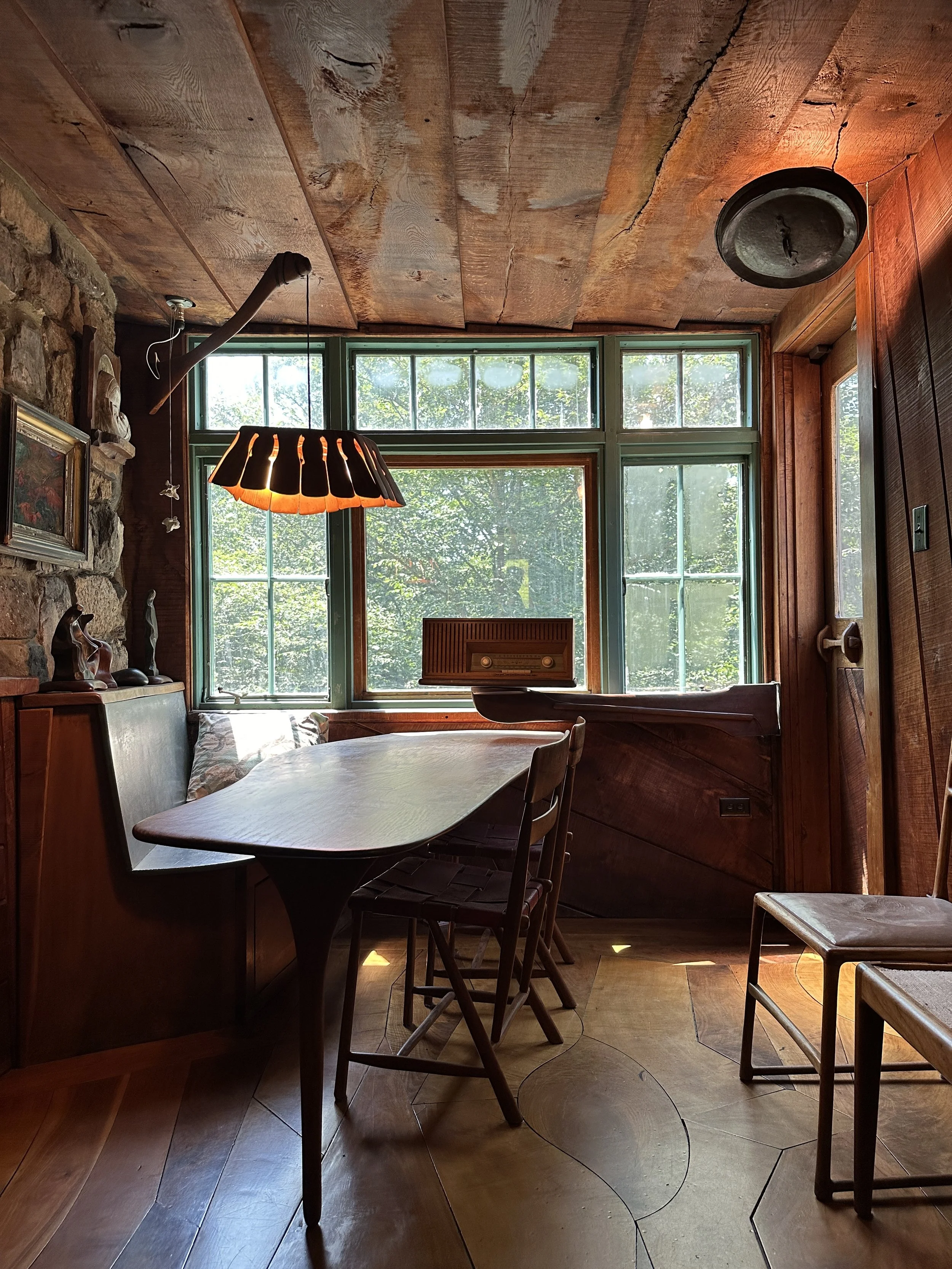
A view out of the dining area invites nature in.
What lingers after a visit is not any single object but the feeling of inhabiting someone else's imagination. The Wharton Esherick House reminds us that originality is not a style. It is the result of sustained attention, curiosity, and the courage to make things according to one's own vision.
In an age of standardization, the house feels almost radical. It stands as a testament to the possibility that our surroundings can be more than functional or fashionable. They can be deeply personal, endlessly inventive, and filled with wonder.
The magic of the Wharton Esherick House lives in those countless details—the carved lock, the sculptural light fixtures, the hidden vents, and a hundred other surprises. Together they create a place where art is not merely displayed. It is woven into the fabric of everyday life.